

Hwang Dong-hyeok traces Squid Game from Iceland to Hollywood
At 2026 K-Forum, Squid Game director Hwang Dong-hyeok reflects on K-content's global reach and previews his reality-based dystopia KO Club.
"You see Squid Game merchandise in every city"
Hwang Dong-hyeok, the director behind the global phenomenon 'Squid Game,' shared moments when he truly felt the global influence of K-content.

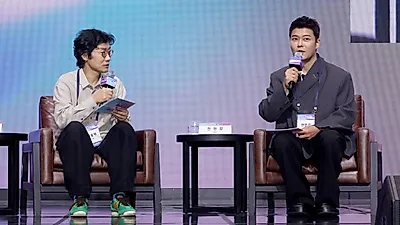
On the 9th, Hwang attended the keynote discussion 'K-Content, Becoming a Playground for Players' at the '2026 K-Forum' held at Conrad Seoul in Yeouido. Co-hosted by Ilgan Sports and The Economist, the forum was held under the theme 'Play K,' with entertainer Jun Hyun-moo serving as the moderator.
Hwang stated that he encounters traces of 'Squid Game' wherever he goes in the world. "No matter which country or city I visit, I can easily see related merchandise like the ○△□ masks or the Young-hee doll," he said, noting the content's massive ripple effect. Encountering fan passion in unfamiliar lands came as a fresh shock. "In Iceland, a middle school girl approached me first to say she is a fan of K-pop and K-series," Hwang recalled. "It was truly amazing to see a young student from such a distant country so enthusiastic about Korean culture."
He also mentioned a scene he witnessed on the streets of Hollywood, USA. Referencing a campaign advertisement jointly conducted by Netflix and Duolingo, Hwang said, "I saw an ad in Hollywood using the phrase 'If you don't know Korean, you'll be punished.' Seeing something that was once hard to imagine become a reality made me feel the power of content once again."
Most Korean-style games become global games
The secret to 'Squid Game' becoming a game played by people worldwide lay in its Korean-style subject matter. "From the beginning, I never imagined people all over the world would make Dalgona or mimic 'Red Light, Green Light'," Hwang emphasized. "The most Korean-style games actually became content that the world enjoys together."
During the preparation for the project in 2019, he focused on the potential of 'games' as a subject matter with low language barriers. He judged that because games involve actions anyone can intuitively understand, international viewers would easily accept them. At the time, Hwang wrote down all the games he played as a child in a notebook and contemplated which games could create the most dramatic scenes. Rather than simply choosing fun games, he focused on selecting games that could naturally generate relationships and conflicts between characters.
The process of preparing for Season 2 and Season 3 is even more demanding. "A drama isn't made simply because a game is fun," Hwang explained. "The story comes alive only when interactions, conflicts, and relationships between players are established." Since many of the candidate games made it difficult to form character relationships, he also attempted to combine several games into a single game.
Next project 'KO Club,' a reality-based dystopia
Hwang revealed the direction of his upcoming project, 'KO Club.' This work is set in another dystopian world. "It is similar to 'Squid Game' in that it combines drama, action, and black comedy elements, but the biggest difference is that it deals with a story happening entirely in reality," Hwang defined. Unlike his previous work which dealt with a fantasy-like space, 'KO Club' portrays a story more grounded in reality.
Inspiration for the work came from different places. While 'Squid Game' began from a manga he once enjoyed reading, 'KO Club' began from the writings of author Umberto Eco. Regarding the possibility of expanding the 'Squid Game' universe in the future, Hwang stated, "I have many ideas," adding, "I also have the desire to remake it as a new version someday."
Related articles
Jun Hyun-moo's 11-show secret: leaving his soul behind


Ha Ji-won turns idol-stage courage into a K-Forum lesson